
Prado National Museum
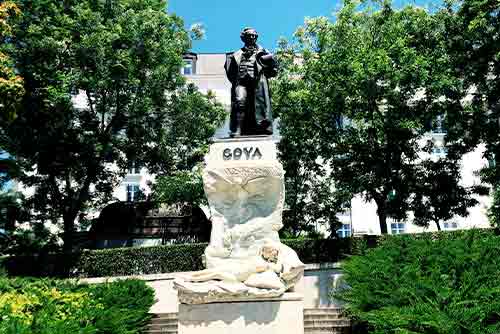
Prado Museum; Prado means “meadow”. The name comes from the fact that in the past, nobles built mansions in the meadows to display their collections.
The Paseo del Arte, Madrid’s Avenue of the Arts, is home to a wide variety of works of art. You’ll find the Prado, Thyssen-Bornemisza and Museo Reina Sofia along this one-mile stretch. Three world-class museums, an art promenade, and the Royal Palace, the official residence of the Spanish royal family. These are the main reasons why Madrid has become one of Europe’s leading cultural centers. In July 2021, the Paseo del Prado and Buen Retiro neighborhoods will be declared a UNESCO World Heritage Site.
A memorable piece in the Prado is Diego Velázquez’s “The Maids of Honor”; when Picasso was in Spain, he stopped by the Prado and had a chair put in front of the painting, which he said he often sat in.
Overview :
The Prado National Museum, located in Madrid, Spain, is one of the most renowned art museums in the world. It houses an extensive collection of European art, with a particular emphasis on Spanish artists such as Francisco Goya, Diego Velázquez, and El Greco.
The museum’s origins can be traced back to the Spanish royal collection, which was initially housed in the Royal Palace. However, in 1819, King Ferdinand VII decided to establish a separate building to showcase the impressive collection to the public. The Prado Museum was officially opened to the public in 1819 and has since become a cultural landmark in Madrid.
The museum’s collection spans a wide range of artistic periods, from the Middle Ages to the 19th century. Visitors can admire masterpieces such as Velázquez’s “Las Meninas,” Goya’s “The Third of May 1808,” and Bosch’s “The Garden of Earthly Delights.” The Prado also features works by renowned artists from other European countries, including Titian, Rubens, and Rembrandt.
The Prado National Museum not only has a permanent collection but also hosts temporary exhibitions, educational programs, and cultural events throughout the year. It is a must-visit destination for art enthusiasts and history lovers, offering a unique opportunity to explore the rich artistic heritage of Spain and Europe.
History:
The Museo del Prado is a world-class art museum located in Madrid, the capital of Spain. Opened in 1819, the museum has a 200-year history, with collections dating back to the 15th century, Spain’s heyday. A world power in the 15th and 16th centuries, Spain ruled Flanders (the Netherlands and Belgium), the Kingdom of Naples in Italy, and had vast colonies from Mexico to South America and the Philippines. As a country that once formed a great empire, the museum’s collection includes works by Spanish as well as Dutch, Italian and French painters.
The Prado Museum was commissioned in 1785 by King Carlos III of the House of Habsburg and designed by architect Juan de Villanueva. Originally conceived as a natural history museum, it was postponed due to financial difficulties and then transformed into a national art museum by his grandson, Ferdinand VII, and opened to the public in 1819. Ferdinand VII’s queen, Isabel, is said to have been instrumental in its construction and opening.
It begins with the Holy Roman Emperor Charles V, who founded the Habsburg dynasty. Charles V was known in Spain as Carlos I. The founder of the Habsburg Empire, Charles V was defeated in the Wars of Religion in his later years and passed the emperorship to his son, who traveled to Spain to rest. The collections he amassed during his reign in the 16th century form the basis of the Prado Museum.
Today, the Museo del Prado stands as a testament to Spain’s rich artistic heritage and its historical ties to the Habsburg dynasty.
Featured collections :
The Prado Museum is a collection of paintings by court painters commissioned by the Spanish royal family. It has a large collection of works by Dutch, Italian, and Spanish painters, including, Fra Angelico- “The Annunciation”,
Sandro Botticelli -“The Story of Nastagio degli Onest”,
Antonello da Messina- “The Dead Christ supported”,
Albrecht Dürer- “Self-portrait at 26″,”Adam and Eve”
and Raffaello Sanzio
painter unknown -“Prado Mona Lisa”,
Weyden, Rogier van der – “The Descent from the Cross”,
Hieronymus Bosch – “The Garden of Earthly Delights”,
Tiziano Vecellio – “Emperor Charles V with a Dog”,
Peter Paul Rubens -“The Three Graces”,
Diego Velázquez – “The Maids of Honour”,
Francisco de Goya – “Saturn Devouring His Son”,”The Family of Carlos IV” Francisco Goya’s work is particularly prominent.
The museum has 8,200 drawings, 7,600 paintings, 4,800 prints, and 1,000 sculptures. The total collection is more than 21,000 pieces, of which 1,300 are on display, while the rest are stored in warehouses or loaned to other museums.
Visiting Detail:
Location : Calle Ruiz de Alarcon 23, 28014 Madrid Spaincopymap
Open : Mon~Sat 10:00~20:00
Sundays and public holidays 10:00~19:00
Closed days: January 1, May 1, December 25
Founded : 1819
Official Website : https://www.museodelprado.es/en

